
ORv3 vs. ORv3 HPR: What's the Difference?
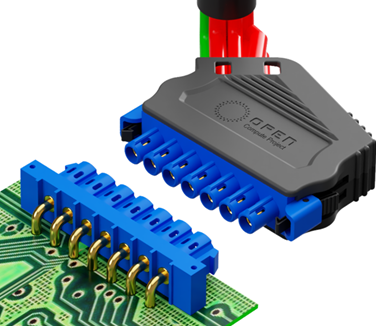
Both are versions of Open Rack v3, the Open Compute Project (OCP) rack standard originally championed by Meta.
ORv3 operates in a 42-inch-deep rack with up to two 18kW Power Supply Unit (PSU) or Battery Backup Unit (BBU) shelves.
ORv3 High-Power Rack (HPR) operates in a 48-inch-deep rack with up to three 33kW PSU or BBU shelves.1
While a traditional ORv3 rack can draw 36kW under optimal conditions, an ORv3 HPR rack can draw up to 140kW.1
To support the increased power demands, you need more copper in the busbar.
The connectors are physically the same, just keyed differently.
Some History
The big idea of Open Rack — going back to ORv1— is to stop putting a separate AC power supply in every server and instead run a centralized DC busbar down the back of the rack. Every shelf or server connects to that busbar, drawing DC power directly. This saves roughly 15–30% of power per rack compared to traditional racks where every box has its own PSU.1
Higher voltage means lower current for the same power, which means less power loss (I²R) in the copper and the ability to push much more wattage down the same bar.
Standard ORv3
Standard ORv3 is the workhorse rack you’ll see in most modern hyperscale and OCP-aligned deployments today.
- Busbar voltage: ~48 V DC (51 V or 54 V nominal at the shelf output)
- Per-rack power: Roughly 18 to 36 kW in typical deployments
- Per-shelf power: A typical 1OU power shelf is 18 kW (15 kW N+1), built from six 3 kW PSUs
- AC Whip: 20A 12AWG SOOW for North America, IEC309 32A H07RN for Europe
ORv3 HPR
HPR is the same architectural family, but the busbar and power shelves have been beefed up to feed AI/ML racks full of GPUs.
- Busbar voltage: Same 48 V DC nominal — that didn’t change
- Per-rack power: Beyond 92 kW per rack, with projected supported loads up to 140 kW
- Per-shelf power: 33 kW from a 1OU three-phase shelf (six 5.5 kW PSUs)
- AC Whip: 30A 10AWG W for North America, , IEC309 32A H07RN for Europe (did not change)
The Busbar
“One of the main differences between the standard ORV3 and the ORV3 HPR racks is a deeper busbar. In the HPR configuration, the busbar is extended and deepened to support this capacity, while remaining compatible with standard ORV3 equipment.”2
More copper cross-section means the bar can carry the much higher current that 100+ kW at 48 V demands. Crucially, the HPR busbar is backward-compatible with standard ORv3 IT gear clips — an ORv3 server clip will mate onto an HPR bar just fine. This was deliberate, so operators can mix and match as they upgrade.
Due to restraints from existing system designs, HPR busbars must keep the same 35mm width as a standard ORv3 busbar. The HPR busbar is 125mm deeper which is why the rack is 6 inches deeper than a standard ORv3 rack.1
The Connector: Same Form Factor
The ORv3 connector did not change. The pins are the same. The plastic is the same color family.
Keyed up vs. keyed down
This is a mechanical poka-yoke on the AC input connector of the power shelf — the 7-pin universal connector on the back of the PSU shelf that accepts the AC whip from the tap-box. The connector body has physical key tabs molded into it.
-
Keyed down on the left = standard ORv3 power shelf. Mates only with a keyed-down AC whip/receptacle, rated and breakered for the ORv3 power envelope.
-
Keyed up on the left = ORv3 HPR power shelf. Mates only with a keyed-up AC whip/receptacle, rated and breakered for the higher HPR envelope.
The only thing stopping a tech from cross-plugging them is that tab orientation. Which is the entire point.
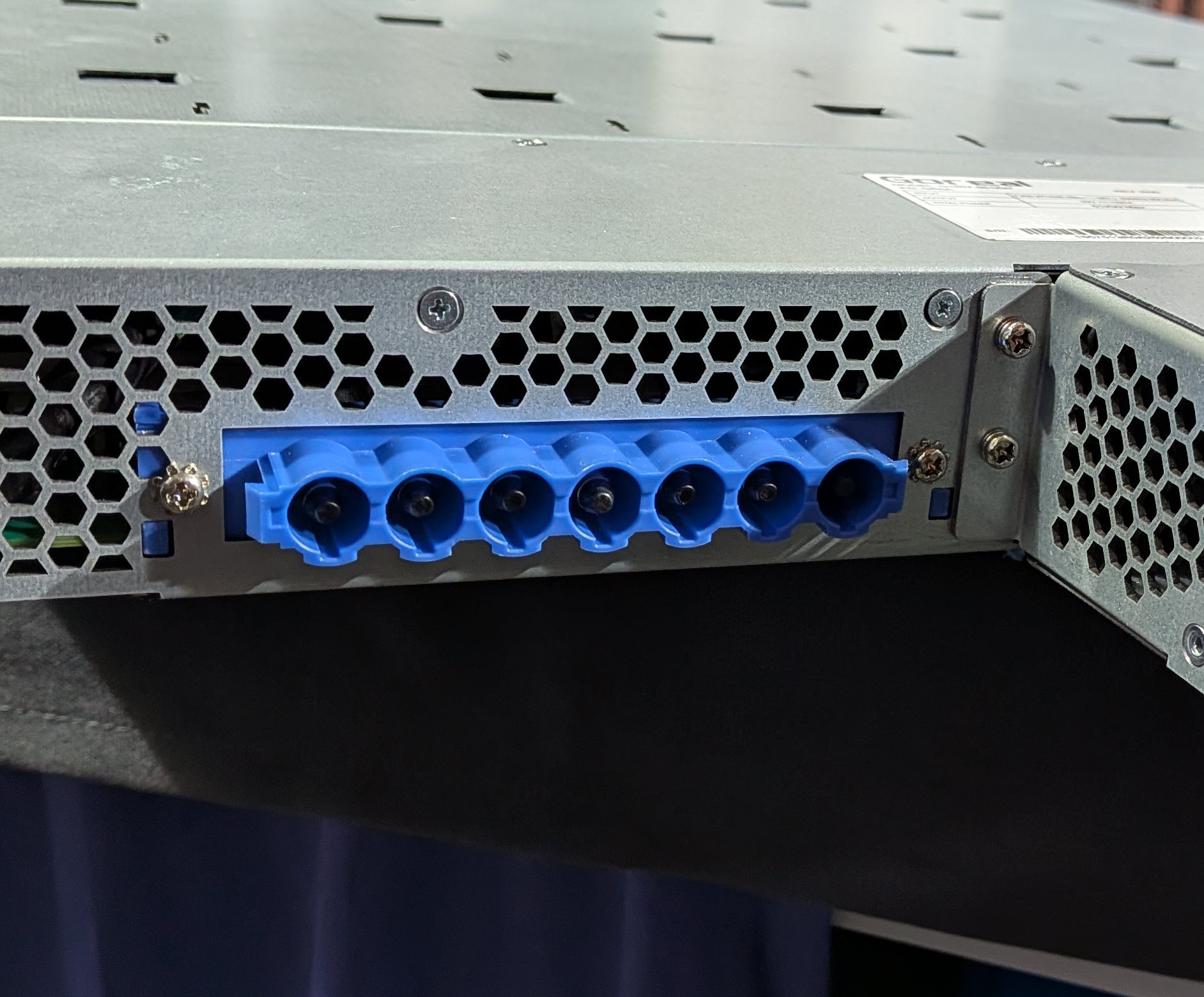 Image of an ORv3 Connector, Keyed-Down
Why the keying matters
This is the kind of safety detail that looks trivial on a datasheet and saves you from a very expensive site visit in real life.
An ORv3 shelf and an HPR shelf look nearly identical from the back. Both are 1OU. Both use the same family of universal 7-pin AC inputs. Both feed a 48 V busbar via blind-mate. But the AC infrastructure feeding them is sized differently such as the upstream breakers, and the whip gauge.
If a tech grabs the wrong shelf from a parts cage and slots it into the wrong rack’s whip:
- A standard ORv3 shelf plugged into an HPR feed is sitting behind a breaker that won’t trip until well past the shelf’s rated current. A fault inside that shelf could cook it before protection kicks in.
- An HPR shelf plugged into a standard ORv3 feed will trip the upstream breaker on its first real load excursion, since one HPR shelf at full tilt (33 kW) draws more than the standard feed’s breaker is sized for. You bring down whatever else is on that branch.
Either way it’s bad. Mechanical keying makes the mistake physically impossible — the tabs don’t line up, the connector doesn’t seat, the tech grabs the right shelf instead. Same philosophy as the L5-20 / L6-20 / L14-30 family of locking plugs in conventional power: same pin count, deliberately incompatible bodies.
“Why couldn’t the tech just flip the cord upside down,” you may be asking yourself. Technically, this is possible, but the exist angle of the cord would cross the busbar – an immediate indication that you have the wrong whip.
Why ORv3 at all?
The whole evolution from ORv2 → ORv3 → ORv3 HPR is one story: AI accelerators eat power faster than infrastructure can keep up.
- ORv2 at 12 V topped out around 12–15 kW per rack. Fine for general-purpose web and cloud fleets.
- ORv3 at 48 V opened the door to 18–36 kW per rack and brought blind-mate connectors. That covered the first wave of ML training and serving.
- Then came higher powered chips and the realization that a single rack full of those chips wants 70, 100, 140 kW. The 48 V busbar physics didn’t have to change — the bar just had to get thicker. Hence HPR. And once two near-identical shelves exist with very different AC requirements, you need keying to keep them straight.
The trajectory keeps going. Google, Meta, Microsoft, and the OCP are jointly working on the Mount Diablo spec, which moves from 48 V to 400 V to support 1 MW of IT load per rack.2 At that point you’re no longer powering a server rack; you’re powering a small substation — and you can bet there will be a whole new family of connectors to go with it.
See Our Product Offering
Summary
So: standard ORv3 is your general-purpose, 18–36 kW workhorse. HPR is the same family with a deeper busbar, and beefier shelves getting you to ~140 kW per rack for AI workloads — while keeping the connector and clip ecosystem compatible so your investment isn’t stranded. The keyed-up / keyed-down AC inputs are the mechanical interlock making sure each shelf only ever meets the AC infrastructure it was designed to handle.
Quick reference
| Standard ORv3 | ORv3 HPR | |
|---|---|---|
| Busbar voltage | 48 V DC nominal | 48 V DC nominal |
| Busbar depth | Standard | Deeper (more copper) |
| Per-rack power | 18–36 kW | 92–140 kW |
| Typical shelf | 18 kW (6×3 kW) | 33 kW (6×5.5 kW), paralleled |
Sources
-
Shapiro, Dmitry. “OCP ORv3 High Power Rack HPR Ecosystem Solution” https://www.youtube.com/watch?v=FgO7low7HXw ↩ ↩2 ↩3 ↩4
-
Bakkeren, Matty. “OCP EMEA Summit Highlights: The Race to 1MW IT Loads per Rack.” TechArena, May 6, 2025. https://techarena.ai/content/ocp-emea-summit-highlights-the-race-to-1mw-it-loads-per-rack ↩ ↩2